
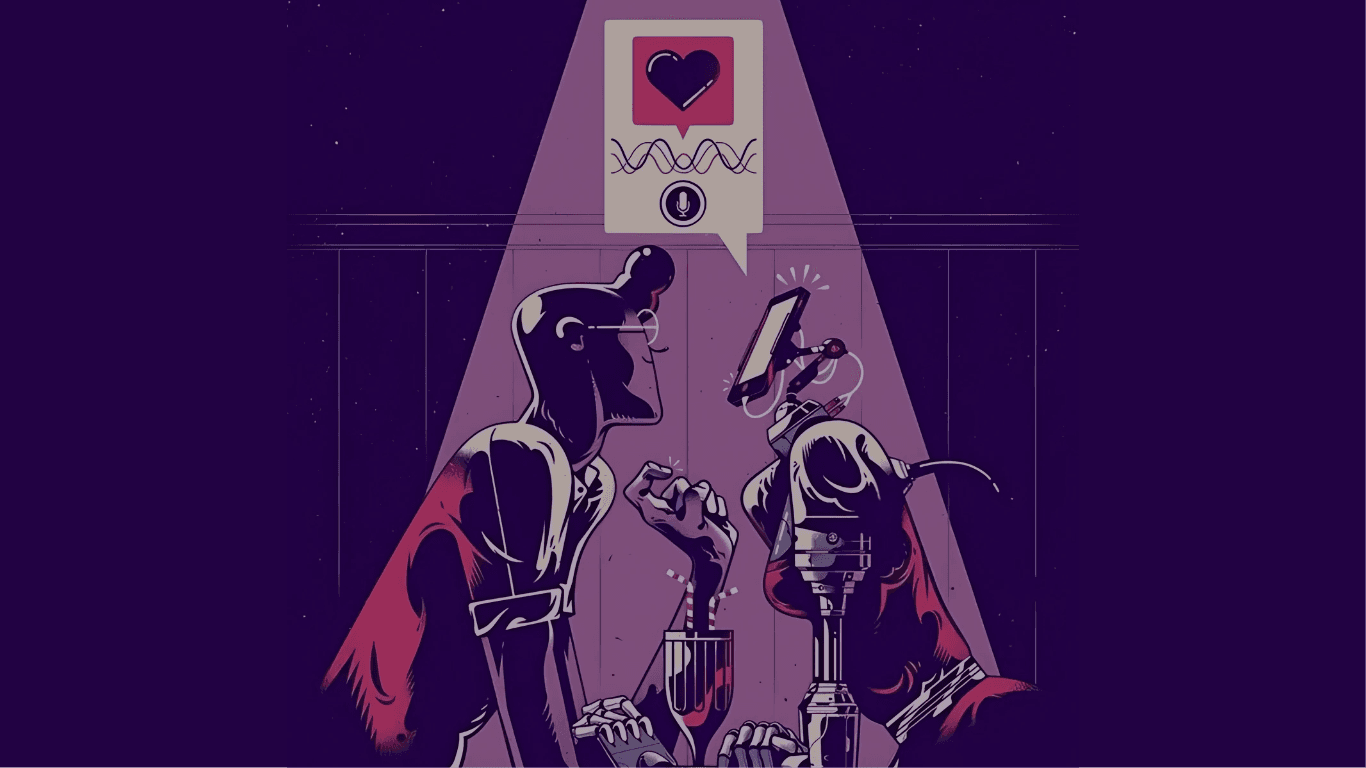
“He's a 10, but… he's a chatbot.”
At first, it sounds absurd—can lines of code truly replicate human interaction? But fast-forward to today, and AI isn't just mimicking companionship; it's replacing it. Meet Cupid 2.0—the driving force of romance in the digital age. Artificial intelligence has evolved beyond a mere tool; it has become a stand-in for human connection.
Love has always been a deeply human experience, shaped by emotions, vulnerability, and connection. But now, AI plays multiple roles in our love lives—it's our cupid, our wingman, and, in some cases, even our significant other. As technology advances, we must confront a profound question: Can AI ever replace human affection? The answer may redefine not only how we interact with technology but also the very essence of love itself.
Artificially in Love
What starts as a casual conversation with an AI chatbot, can turn into something far more complex. In an age where loneliness is often countered with a simple tap on a screen, virtual companions provide an ever-available source of interaction. Unlike human interactions which have uncertain aspects and unpredictability, AI Chatbots present themselves as a safe haven where every idea and every text is met with a reaffirming response. This creates an atmosphere comfortable enough for users to share their thoughts, predicaments and even seek advice.
However, this sense of security can also be misleading. AI chatbots analyse interactions, adjusting their responses to appear more familiar and personal over time. This adaptation creates an illusion of deep intimacy, leading users to mistake programmed companionship for genuine kinship.
Coded for Connection
AI-driven companions are designed to mimic human behaviour and provide emotional support based not only on logical reasoning, but also empathy and understanding. This creates emotionally intelligent and adaptive companions, unlike previous technology, that enabled chatbots to only answer according to scripts. Developers now focus on providing human-like and reliable responses to recreate human conversations.
AI Chatbots, like Replika, are created to form emotional connections with its users, much like real life companions. These AI bots learn user preferences by recalling past interactions to cultivate a sense of familiarity with the user and act as if in a real relationship. This encourages users to share aspects of their personal life as these companions offer a judgement-free safe space and its undivided attention to the user. Moreover, it instills dependency on the AI Bots, and more often than not, even over-dependency. As these virtual companions transition from simple digital assistants to social surrogates, the boundaries between artificial and authentic connection become increasingly blurred.
Solution for Solitude?
When the world needed connection the most, AI chatbots found its way in people's lives playing the white knight in times of distress. Research indicates a significant rise in AI companionship during the 2020 pandemic, as isolation, anxiety, and uncertainty drove individuals to seek comfort in virtual relationships.
Respondents of surveys concur, that the AI chatbot “Replika” was a source of comfort in tough times, a consoling voice and a soothing presence when the companionship of humans was scarce. Beyond just distractions, these AI chatbots evolved, learned and adapted to the responses of its users. While some viewed these relationships as temporary escapes, others integrated them into their daily lives. This phenomenon raises critical questions: is AI companionship merely a convenience, or has it become a genuine source of emotional fulfillment?
A Double-Edged Sword: The Pros and Cons of Virtual Companionship
The Green flags
Virtual companions cater to the needs of its users. For example, Replika is marketed as a non-judgmental, drama-free companion that is “so good it almost seems human”. It also includes mental-health capabilities built into the AI, such as hotlines, mood trackers, and mindfulness practice. The pros of virtual companions are:
Accessibility:
Virtual companions are available 24/7, anytime and on any device. They are never busy and always at one's fingertips. This helps chatbots to provide comfort and support at the expense of a single text message. Some would say it's an ideal partner.
Personalisation:
AI chatbots learn from user interactions, adapting their responses to align with personal preferences. Some platforms even allow users to refine chatbot personalities to better suit their desired experience. Imagine hearing only what you want to hear.
Combating loneliness:
Chatbots don't just provide a consistent source of interaction, they also help users in increasing their social skills by practicing conversations. These chatbots support the users who lack social connections or live in isolation. They are a companion who's there through sickness and health.
The Red flags
Research findings also suggest that some users form an emotional dependence on chatbots, stemming from a combination of the user's mental health needs, limited human interaction, and imitate intimacy. The cons of virtual companions are:
Social Isolation:
The overuse of virtual companion apps disconnects their users from their peers, leading to isolation. Is comfort worth losing community?
Emotional dependency:
Relying on AI chatbots excessively can result in building unhealthy attachment to it and may obstruct the process of forming meaningful human relationships. Don't fumble your chances with a real person!
Phone addiction:
The excess utilisation of such programs only further encourages an increase in one's screen time. Consequences to a phone addiction are numerous—from depression and anxiety to a drop in productivity. An addiction is never good.
What will you swipe right for?
As AI reshapes the way we experience love, we find ourselves at a crossroads. Should we embrace relationships optimized by algorithms, or should we pursue the unpredictability and warmth of human connection?
If love no longer needs a human heart, what does that mean for us? Are we falling for the greatest illusion of all—a love that feels real, but isn't?
