"The greatest enemy of knowledge is not ignorance, it is the illusion of knowledge."
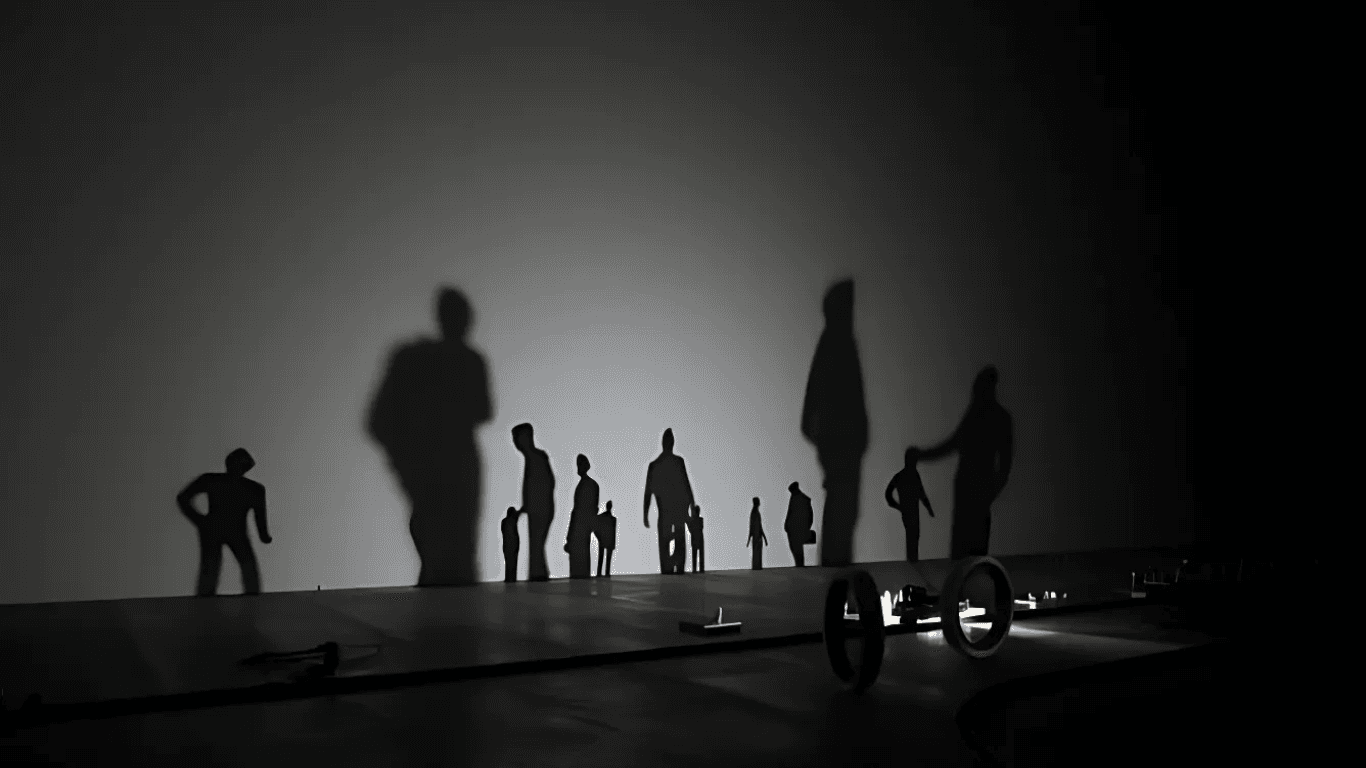
In a world where access to knowledge is just a click away, it seems as if society is only regressing, trapped in a digital labyrinth of distorted realities. The walls of this labyrinth reflect the shadows of the outside world, deluding us into believing that they are reality, similar to the 'Allegory of the Cave' proposed by the Greek philosopher, Plato.
The 'Allegory of the Cave' is a dialogue between Socrates and Plato's brother, Glaucon, recorded by the Greek philosopher Plato in his work, The Republic. In this allegory, prisoners are chained inside a dark cave from birth, unable to move their heads, and thus can only see the wall in front of them. Behind them, a fire casts shadows on the wall, created by objects passing in front of it. These shadows are mere imitations of reality, better understood as simulations. However, the prisoners believe them to be the only reality, as they have never seen anything else. Here, they are prisoners not just of their physical chains, but also of their perception of reality.
One day, a prisoner escapes the cave. As he steps outside, the sunlight blinds him—he had only ever known the dim flicker of firelight in the cave. Over time, however, his vision clears, and he begins to perceive the world as it truly is. He comes to understand that the shadows on the wall were mere distortions of reality, nothing more than illusions. He returns to free the other prisoners, but they resist. So entrenched are they in the comfort of the simulated reality they've known, that they are unable, or unwilling, to accept the truth.
"The most dangerous worldview is the worldview of those who have not viewed the world." – Alexander von Humboldt
Centuries later, it seems humanity remains trapped in the cave, though now, the shadows are cast by the media consumed by people. American media theorist Neil Postman critiques this modern information landscape, referring to it as 'disinformation.' He argues that contemporary media has transformed information into a collection of misleading, irrelevant, fragmented, or superficial content. While this content creates the illusion of knowledge, it ultimately blurs true understanding. The line between fact and fabrication becomes increasingly blurred, particularly within news media, which often presents its content as the absolute truth.
Rather than providing a neutral representation of events, modern news media often presents what French philosopher Jean Baudrillard termed as “alternative realities." These are not simple interpretations or biases but carefully constructed simulations of the truth, where media outlets create competing narratives that shape public perception. Baudrillard argued that in an age of hyperreality, the line between the real world and its representation becomes increasingly blurred. Media outlets, influenced by ideological bias or the drive for engagement, offer different versions of the same event—whether a political crisis, social issue, or global phenomenon. In this context, truth becomes subjective, and consumers are able to select their preferred reality, often reinforcing their own ideological stance.
This selective consumption of reality leads to the creation of echo chambers, where individuals are repeatedly exposed to information that reinforces their pre-existing beliefs. This cycle of confirmation bias becomes self-perpetuating, distorting their perception of reality. As people increasingly seek out media outlets that cater to their views, they become further entrenched in their own perspectives, which only serve to further divide society.
Social media platforms, particularly, have become powerful incubators for echo chambers, driven by algorithms that prioritize content which drives engagement. These algorithms trap users in digital 'caves,' consistently feeding them content that aligns with their specific interests, preferences, and biases. In many ways, this creates a modern-day version of Plato's chains, restricting users to a narrow, often distorted, view of the world.
Individuals, much like the prisoners in Plato's Allegory of the Cave, have grown so accustomed to the dim light of their narrow perspectives that they refuse to recognize the sun shining on the truth. The consequences of this are dire, and instead of encouraging genuine dialogue across ideological divides, it exacerbates polarization. This deepening divide has led to hostile conflicts worldwide, with India serving as a key example of these global tensions.
This is where media literacy comes in as a crucial tool for individuals to navigate the complex landscape of media messages. It serves as a lens through which one can differentiate between distorted perceptions and reality. Essentially, it is the ability to access, analyze, evaluate, create, and communicate information across various forms of media. This empowers individuals to critically assess the messages conveyed through media, distinguishing credible sources from misinformation or bias, and engaging with media in a responsible manner. Media literacy also includes the ability to identify the purpose and target audience of content, detect biases or hidden agendas, understand the impact of media ownership and algorithms, and produce content that is ethically sound. In today's digital age, media literacy is not just a competency but a necessity for informed and active participation in societal discourse shaped by media.
In the words of Søren Kierkegaard, "There are two ways to be fooled. One is to believe what isn't true; the other is to refuse to believe what is true."
Will society remain trapped in Plato's cave, satisfied with comforting illusions? Or will it find the courage to face the uncomfortable truth?
The choice between ignorance and enlightenment depends on society's willingness to face the world as it truly is, questioning the narratives that shape their understanding. In a world of shadows, the pursuit of truth becomes society's most powerful act of liberation.
